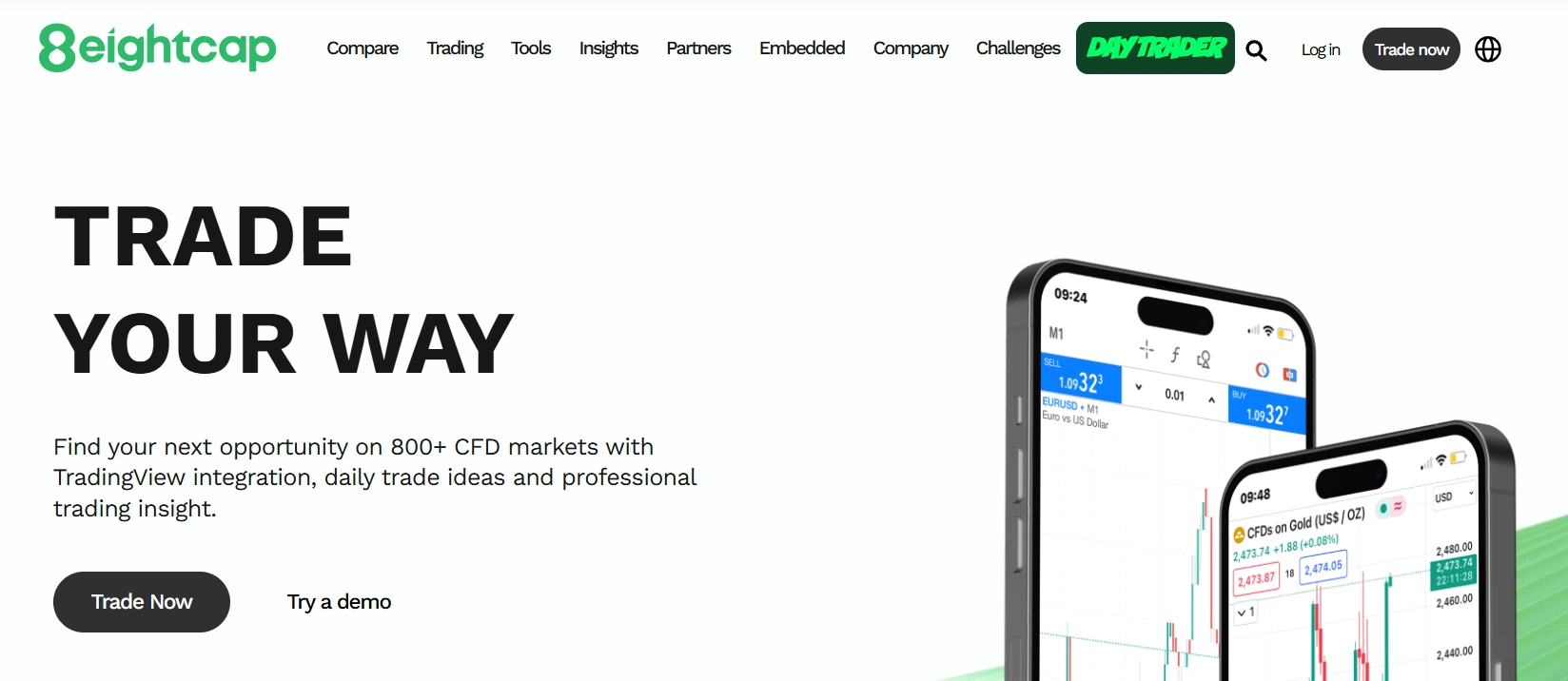
Eightcap Partners Afiliate Program review
Commission Rate & Model
In our review, Eightcap Partners is best understood as a broker affiliate program with two distinct monetization paths: funded-account CPA for traditional forex/CFD broker acquisition, and a prop challenge fee commission for audiences interested in funded trading challenges. This structure makes the program flexible: affiliates who excel at high-intent broker SEO can focus on CPA, while creators and trading educators can monetize “challenge” traffic with a straightforward percentage-based payout.
| Commission component | What you earn (exact) | Professional review analysis (SEO) |
|---|---|---|
| Funded client CPA | Up to $600 USD for each referred client who becomes a funded client. | This model is built for “open an account” intent. It typically performs best on pages like “Eightcap review”, “Eightcap spreads”, “Eightcap MT4/MT5”, and “Eightcap minimum deposit”, where users are already close to registering and funding an account. |
| Prop challenge commission | 20% commission on each referred trader’s prop challenge fee purchase. | This is a clean, easy-to-explain offer for content creators: if the user buys a challenge, the affiliate earns 20% of the fee. It aligns well with “prop firm challenge” keywords, YouTube walkthroughs, and trading education funnels. |
| Other commercial models | Available on a custom / negotiated basis depending on traffic profile and volume. | Broker programs frequently tailor deals for larger partners (for example, different economics by region or acquisition type). The key point for affiliates is to align the model with the funnel: CPA for funded accounts, percentage commission for prop challenge purchases. |
| Example math (CPA) | 10 funded clients × $600 CPA cap = $6,000 USD (maximum under the stated cap). | Real-world results depend on qualification rules (what counts as “funded”), geo mix, and conversion quality. Affiliates typically scale by improving activation rates after signup. |
| Example math (prop fees) |
If a referred trader buys a $200 challenge fee: 20% → $40 commission. |
This model is attractive because the conversion event is simple: purchase of a challenge fee. It works best with tutorial-based content and clear product explanations. |
- High CPA ceiling: up to $600 per funded client
- Second monetization path: 20% on prop challenge fees
- Flexible deal potential for higher-volume partners
- Works across SEO, YouTube, and trading education funnels
- Exact definition of a “funded client” (deposit/activation requirements)
- Geo-specific eligibility and whether CPA varies by country group
- Any restrictions for paid ads, brand bidding, or incentive traffic
- Whether prop challenge commission is time-limited or tier-based
Eightcap Partners pays CPA up to $600 USD per funded client and offers a prop-style monetization path with a flat 20% commission on prop challenge fees. The CPA offer is best for high-intent broker acquisition traffic, while the 20% prop fee commission fits tutorial-led content and challenge-focused trading audiences.
Cookie Duration
Cookie duration and attribution rules matter more in broker affiliate marketing than in many other verticals because the conversion path is longer: users often click, research regulation and spreads, compare brokers, then return days later to complete KYC and fund an account. When a program does not state a cookie window publicly, affiliates should assume attribution can be more fragile than long-cookie SaaS offers and build funnels that maximize same-session progression (registration and onboarding steps) rather than relying on delayed return conversions.
| User journey scenario | Attribution risk level | Practical affiliate implication |
|---|---|---|
| Click → registers the same day | Lowest risk (best-case tracking behavior). | Review and comparison pages should push a clear next step (account opening, platform selection, KYC checklist) to reduce drop-off before registration. |
| Click → returns later to register | Moderate to high risk when cookie rules are not confirmed. | Long-form “research-first” content can underperform if users do not convert quickly. Strong internal linking to “how to open account” pages improves outcomes. |
| Registers → delays funding/KYC | Business-model risk (CPA qualification is typically tied to funding/activation). | Affiliates should educate on funding, verification, and platform setup to increase activation rates and protect CPA qualification. |
| Cross-device (mobile click → desktop signup) | Higher leakage risk in most affiliate tracking environments. | Landing pages should be mobile-optimized and encourage completing signup on the same device when possible. |
| Multiple broker comparisons / multiple clicks | Variable (depends on last-click vs first-click rules, which are not stated publicly). | Pages that send users to many brokers can reduce attribution probability. Clear positioning and decisive CTAs improve the odds of being the credited referrer. |
| Privacy constraints / cookie restrictions | Moderate to high for delayed conversions. | Expect some tracking loss from users with strict browser settings. Strong “convert-now” flows reduce dependence on long tracking windows. |
- High-intent SEO: “Eightcap review”, “Eightcap vs [broker]”, “Eightcap spreads”, “Eightcap MT4/MT5”
- Onboarding content: account opening, verification, funding methods, platform setup
- Conversion-focused pages with clear CTAs and short decision paths
- Email or remarketing (where compliant) to bring users back through your own channel
- Exact cookie duration in days (e.g., 30 days, 60 days, etc.)
- Attribution model (last-click vs first-click) and how re-clicks are handled
- Cross-device/cross-browser tracking behavior (if supported)
- Whether “funded client” credit is tied to a time limit after click or signup
Eightcap Partners emphasizes an affiliate portal with real-time reporting and referral tracking, but does not publicly state an exact cookie duration or attribution rules on its public affiliate pages. For performance planning, cookie duration and attribution should be verified inside the partner portal or with an affiliate manager before scaling long-funnel SEO or paid traffic.
Payouts
In our professional review of the Eightcap affiliate program, the payout structure follows a standard broker-affiliate model. Commissions are calculated monthly and paid once the affiliate balance reaches $500 USD. This minimum threshold positions the program toward serious trading and forex affiliates rather than entry-level publishers.
| Component | Exact Terms | SEO & Professional Analysis |
|---|---|---|
| Payout Frequency | Monthly | Monthly settlement is standard in CFD and forex affiliate programs. It allows predictable accounting but is less suitable for affiliates requiring weekly cashflow. |
| Minimum Withdrawal | $500 USD | The $500 minimum is higher than many SaaS affiliate programs, but common in broker partnerships where CPA values can reach several hundred dollars per funded client. |
| Bank Wire | Direct bank transfer | Suitable for higher-volume affiliates and agencies. International bank transfers may include intermediary fees depending on banking infrastructure. |
| Neteller | E-wallet | Popular within the trading and forex ecosystem. Often preferred for faster access to funds compared to traditional wires. |
| Skrill | E-wallet | Widely used in the online trading industry. Offers quicker settlement compared to international bank transfers. |
- Clear minimum threshold: $500
- Monthly structured payouts
- Two major trading e-wallet options
- Suitable for high-value CPA structures
- $500 threshold may delay first payout for small publishers
- Bank wires may involve intermediary banking fees
- Verification of payout details may be required
- Cashflow planning is essential for paid media affiliates
Eightcap Partners pays affiliates monthly once earnings reach $500 USD. Payment methods include Bank Wire, Neteller, and Skrill, aligning with industry standards in the forex and CFD affiliate space.



Languages

Target Market
In practice, the Eightcap Partners target market is not “general finance readers.” This offer is best aligned with users who already have trading intent, such as beginners choosing their first broker or experienced traders comparing execution, spreads, and platform features before depositing. Because broker acquisition funnels often include KYC and funding steps, conversion rates are typically highest when content directly addresses trust and onboarding friction—for example: regulation, account verification, minimum deposit expectations, platform setup, and withdrawals.
| Segment (who converts) | Primary pain points | Best affiliate angles (SEO-first) |
|---|---|---|
| Broker-comparison searchers | Choosing a regulated broker, understanding spreads/fees, deciding between account types, and evaluating platform reliability. | “Eightcap review”, “Eightcap vs [broker]”, spreads/fees breakdown, regulation + trust sections, pros/cons tables. |
| MetaTrader users (MT4/MT5) | Broker compatibility, execution quality, platform setup, VPS usage, and trading tools. | “Eightcap MT4”, “Eightcap MT5”, setup guides, platform tutorials, execution and tools overview. |
| Beginner traders | Trust, onboarding, leverage understanding, risk management, demo vs live transition, and funding the account safely. | “How to open an Eightcap account”, demo-to-live guide, deposit/withdrawal steps, beginner FAQs, glossary content. |
| Active forex/CFD traders | Spreads, slippage, execution speed, instrument availability, and trading costs. | Cost comparisons, spreads overview, trading conditions pages, “best broker for [strategy]” content. |
| Copy/strategy trading audience | Finding a broker that supports their workflow, integrations, and performance tracking needs. | Copy-trading workflows, platform ecosystem content, “best broker for copy trading” or automation-related tutorials. |
- SEO: “Eightcap review”, “Eightcap spreads”, “Eightcap MT4/MT5”, “Eightcap minimum deposit”, “Eightcap withdrawal”
- YouTube: platform walkthroughs, account opening tutorials, MT4/MT5 setup guides
- Trading communities: Discord/Telegram/Reddit-style education hubs (compliance-first)
- Email: trading education sequences that drive broker comparison and onboarding
- Broad personal finance traffic without a clear “open an account” intent
- Content that ignores onboarding friction (KYC, funding, platform setup)
- Audiences focused purely on long-term investing (not CFDs/active trading)
- Markets where the broker is not available or where restrictions reduce eligibility
Eightcap Partners converts best with high-intent trading audiences—users actively searching for a forex/CFD broker, comparing trading platforms, or looking for MetaTrader-compatible brokers. The strongest content angles are broker reviews, comparisons, spreads/fees breakdowns, and step-by-step onboarding guides that reduce friction around KYC and first deposit.
Affiliate Approval Process
In our assessment, Eightcap Partners is best approached as a regulated-style acquisition program: affiliates are expected to clearly explain how they acquire users, where they will publish links, and how they communicate risk. Broker affiliate approvals generally focus on two questions: (1) is the traffic legitimate and aligned with the trading niche, and (2) can the affiliate promote without misleading claims. Affiliates with a real website, content library, or established trading community typically pass review smoothly, while “thin” assets or unclear traffic strategies tend to create approval friction.
| Requirement area | What is typically expected | Common reasons for delays or rejection |
|---|---|---|
| Application completeness | Accurate personal/company information, valid contact details, and a clear description of promotional methods. | Missing details, inconsistent information, or vague traffic descriptions (“social”, “ads”, “content” without specifics). |
| Legitimate promotional asset | A live website/channel/community with trading-related content, audience relevance, and visible publishing activity. | Placeholder pages, thin content, copied material, or an asset that does not match the stated niche. |
| Traffic source transparency | Clear disclosure of acquisition channels (SEO, YouTube, email, PPC, social, communities) and how users are guided to signup. | Hidden sources, unclear funnels, traffic that looks incentivized, or strategies associated with low-quality leads. |
| Compliance & risk messaging | Responsible presentation: no guaranteed profit claims, no “get rich quick” positioning, and clear trading risk framing. | Aggressive income claims, misleading performance promises, or content that minimizes risk and overstates certainty. |
| Paid advertising policies | If PPC is used, affiliates typically must follow strict rules on brand bidding, ad messaging, landing page disclosures, and geographic targeting. | Brand bidding intent, misleading ad copy, prohibited jurisdictions, or “pre-lander” pages that hide material risk information. |
| Geographic eligibility | Traffic and promotions aligned with markets where the broker accepts clients and where the affiliate can legally market trading products. | Unclear geo plan, targeting restricted countries, or inability to confirm the origin of traffic. |
| Verification (if requested) | Proof of identity and/or business information, plus payment method ownership verification if required for payout release. | Missing documentation, mismatched beneficiary details, or late submissions during payout cycles. |
| Ongoing monitoring after approval | Continued compliance once live—especially if traffic methods change or scale. | Switching to restricted traffic sources post-approval, repeated compliance issues, or suspicious lead quality patterns. |
- Trading educators and content sites with a visible publishing history
- SEO operators with broker reviews, comparison pages, and platform tutorials
- YouTube creators who disclose traffic methods and link placement clearly
- Affiliates with a clean compliance track record and transparent funnels
- Submit a live site/channel with relevant trading content and working navigation
- Describe traffic sources precisely (SEO, YouTube, PPC, email, communities)
- State target geos and avoid restricted markets
- Use responsible messaging and avoid performance guarantees
Eightcap Partners uses a manual approval process. Approval is primarily driven by the legitimacy of the promotional asset, transparency of traffic sources, and the affiliate’s ability to market trading offers responsibly. Affiliates with established trading content and clear acquisition methods tend to be approved faster than applicants with thin assets or vague traffic strategies.
Gallery